What defines the standards for project management?
"The primary goal of project management is to provide a structured framework that ensures quality and efficiency across various organizational scales."
Selecting the right tools requires understanding international standards and the reality of modern workplace friction. This guide examines how to choose software that addresses productivity gaps and aligns with established management guidelines.
Key takeaways include evaluating tool functionality against industry standards, addressing workload imbalances, and preparing for automation.
What defines the standards for project management?

At dusk in the quiet office, she ran her fingers over the worn binder, feeling lost amidst the complex rules of the new framework.
To build a reliable system, teams often look toward established frameworks like ISO, which provides a family of standards for quality management systems.
A manager sits at a desk, reviewing a thick binder of compliance documents to ensure every task meets global benchmarks. To build a reliable system, teams often look toward established frameworks like ISO 9000, which provides a family of standards for quality management systems.
For specific project-related guidance, ISO 10006:2003 offers guidelines for quality management within projects.
According to Wikipedia, ISO 21500:2012 provides guidance on project management. Using these frameworks helps teams maintain consistency across different departments. Another relevant standard is ISO/IEC/IEEE 16326:2009, which focuses on systems and software engineering life cycle processes.
These standards serve as a foundation for choosing tools that support rigorous quality control.
- Establish clear objectives and KPIs.
- Define roles and responsibilities.
- Implement consistent reporting protocols.
How can tools address productivity gaps? Best project management tools
At midnight in the dim office, he rubbed his tired eyes while feeling lost in a sea of manual spreadsheets.
An employee stares at a cluttered inbox, realizing that half the day has vanished into administrative tasks rather than actual work. Choosing tools by team size is essential because different scales require different levels of automation and oversight.
A 2014 study conducted by Workfront found that American employees on average only spend 45 percent of their work time on what they were hired to do.
The lack of efficient processes often drains energy from a team.
Selecting the right software can bridge these gaps by automating repetitive tasks. This allows workers to focus on high-value activities instead of administrative friction.
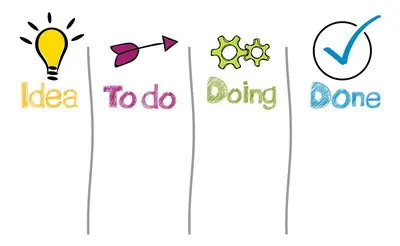
In this sequence, the second step is the most extensive.
Why does team size matter for tool selection?
A growing team moves into a larger office, realizing that the simple spreadsheet used last year can no longer track their complex workflows. Scaling team productivity requires a transition from manual tracking to integrated platforms.

Large organizations often require robust systems that can handle diverse departments and complex interdependencies.
| Factor | Small Team Focus | Large Enterprise Focus |
|---|---|---|
| Primary Goal | Task completion | Process compliance |
| Complexity | Low to Moderate | High to Very High |
Workfront's customers include companies such as Cars.com, Cisco Systems, Comcast, Food and Drug Administration and National Geographic. These diverse organizations demonstrate that different industries require tailored approaches to management.
I noticed that as a team grows, the tool must transition from a simple checklist to a comprehensive ecosystem.
How do we manage workplace tension and conflict?
Two colleagues argue in a hallway over a missed deadline, illustrating how poor communication can derail a project. Efficient workflow tools must address the human element of collaboration to prevent such friction.
A study found that 81 percent of those surveyed experienced workplace conflict with other departments, groups, teams, or co-workers, which resulted in loss of productivity.
In addition to stress, 72 percent of the industry professionals reported office tension as a contributor to stress levels and that they were overloaded and understaffed. When tools do not provide clarity, tension rises.
Addressing these issues requires software that offers transparency in task assignment and clear visibility into workload distribution.
How can automation improve the workflow?
A technician watches a software script run a routine data entry task, freeing up an hour of their afternoon. Team productivity software often incorporates automation to handle low-level tasks.
Workers believe automation will help them spend more time on work that matters, although 48% of workers say they know people who have already lost jobs due to automation.
To implement a new tool effectively, follow these steps:
- Audit current manual processes to identify where time is being lost to administrative overhead. 2. Evaluate potential software against ISO standards to ensure long-term compliance and quality. 3. Run a pilot program with a small group to test how automation affects daily task completion.
Check that the selected tool integrates with existing communication channels to prevent further fragmentation. A project management guide should always prioritize tools that reduce the time spent on meetings and emails.
What are the limitations of tool-based solutions?

A manager attempts to force a new software into an old, rigid hierarchy, only to find that the culture resists the change. No tool can entirely replace the need for clear leadership and defined roles.
A limitation of software is that it cannot fix a fundamental lack of organizational structure or human resource shortages.
One specific limitation involves the complexity of compliance projects. For a Level 2 Project, the goal is to develop and improve compliance to a business process with a targeted completion time of 3 months to 1 year.
If a tool is too complex, it may hinder the very compliance it was meant to support.
The subject here is Best project management tools.
The same subject is also called Top collaboration tools.
This part also covers ClickUp vs Workfront guide.
Choosing tools by team size
Related







Comments 0