Scaling Security: Agents Find Flaws in 1.2M Commits Fast
"The era of the solo developer writing every line of boilerplate is ending; we are entering the era of an architect directing an autonomous workforce."
AI coding agents are evolving from simple text predictors into autonomous collaborators capable of executing complex, multi-step development tasks. They don't just suggest the next line of code; they manage the environment, run tests, and identify vulnerabilities.
* Agentic Workflows: Moving from "predicting text" to "executing tasks" through command logs and test results. * Security at Scale: Agents can scan millions of commits to find critical vulnerabilities in major open-source projects. * Productivity Gains: Automating routine tasks that typically take between 1 and 30 minutes can drastically compress the SDLC. * Expert Oversight: The developer's role is shifting from manual typing to high-level verification and architectural oversight.

How do we move from autocomplete to autonomous execution? At 11:45 PM, a developer sits in a darkened room, staring at a terminal window where a cursor blinks rhythmically. The only light comes from the blue glow of the monitor reflecting off a half-empty coffee mug on the desk. According to an OECD report, only 9% of U.S.
jobs are classified as being at high risk of potential automation.
Instead of typing a function, they enter a single natural language command and watch as the terminal begins to scroll with a flurry of activity—the agent is cloning a repository, installing dependencies, and running a test suite.
An AI coding agent represents a fundamental shift from reactive code completion to proactive task execution. While early models focused on predicting the next token, modern agents utilize an "agentic" workflow.
This means the tool can interact with the operating system, run shell commands, and interpret the results of those commands to decide on the next step.
For instance, OpenAI's Spark model, which was the first production model deployed on Cerebras hardware, showcased this shift by running approximately 15 times faster than earlier Codex versions. This speed allows the agent to iterate through trial and error in seconds rather than minutes.
Unlike a standard chatbot, an agentic system provides command logs and test results, allowing the human user to inspect exactly what the machine has done and why it made certain decisions.
This shift transforms the developer from a "typist" into a "reviewer." The machine handles the heavy lifting of the implementation, while the human provides the intent and the final verification.
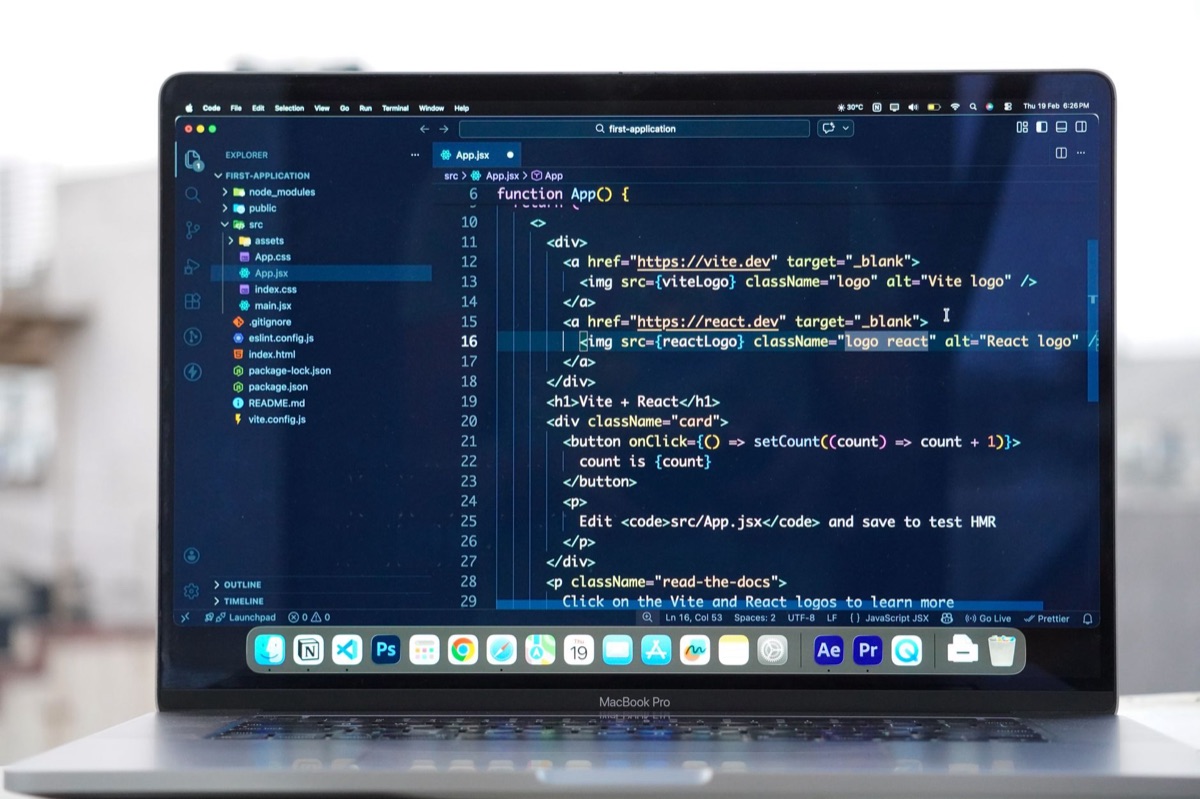
How can I find the needle in this digital haystack? A security engineer walks through a sprawling office, coffee in hand, reviewing a report that flags a critical vulnerability in a core library used by thousands of companies. The hum of the air conditioning and the distant murmur of a meeting room fill the quiet space.
The fix was found not by a human scanning lines of text, but by an automated process that scanned a massive repository overnight.
The most immediate value of AI agents lies in their ability to perform deep-scale analysis and vulnerability detection. Large-scale codebases are too vast for manual oversight to catch every edge case, but agents can process information at a scale humans cannot match.
OpenAI demonstrated this capability by testing its tool on 1.2 million commits over a 30-day period. During this testing phase, the tool identified nearly 800 critical vulnerabilities and more than 10,000 high-severity issues across major projects, including Chromium, OpenSSL, PHP, and GnuTLS.
This level of scanning is impossible for a human team to perform manually in the same timeframe.
Beyond security, agents excel at several specific SDLC scenarios:
- Scaffolding and Boilerplate: Generating the initial structure of a new microservice or API based on a high-level architecture document.
- Unit Test Generation: Automatically writing and executing test suites to ensure new code meets specific requirements.
- Bug Hunting and Patching: Identifying a failure in a test log and automatically proposing a fix to resolve the specific error.
While many routine tasks take between 1 and 30 minutes, an agent can perform these tasks in a fraction of that time, allowing the developer to focus on higher-level logic and system design.
The Workflow: How to Partner with an Agent
A lead developer pulls up a shared screen during a sprint planning meeting. They aren't showing a finished product, but rather a set of instructions being fed into an agent to build a prototype. The team watches as the agent executes the plan, step by step.
To successfully integrate an agent into a professional workflow, you cannot treat it like a search engine. You must treat it like a junior engineer with infinite speed but zero intuition. The following steps outline a standard professional integration:
1. The Setup and Scope Definition Before triggering an agent, you must define the environment and the boundaries. This involves setting up the necessary permissions and providing the agent with the specific context of the repository.
You aren't just giving a prompt; you are defining the "sandbox" where the agent can work.
2. The Execution and Observation Loop Once the task is assigned, the agent enters an iterative loop. It writes code, runs a command (like `npm test` or `pytest`), and reads the output. If the test fails, the agent analyzes the error and attempts a fix.
The developer should monitor the command logs to ensure the agent is staying within the intended scope and not performing unintended system changes.
3. The Inspection and Validation Phase This is the most critical step. Once the agent reports a "success," the human must perform a manual audit.
This involves checking the logic, ensuring the code adheres to company style guides, and verifying the agent didn't introduce "hallucinated" dependencies or insecure workarounds.
When I first started testing these autonomous agents in my own local environment, I found that the most time-consuming part wasn't the coding itself, but the verification. I remember sitting at my desk at 2:00 PM on a Tuesday, watching an agent attempt to refactor a legacy module.
It finished the task in 45 seconds, but the manual audit took me 20 minutes to ensure no subtle logic breaks were introduced.
| Feature | Traditional Autocomplete | AI Coding Agent | | :---│││ | Primary Action | Suggests the next line | Executes a multi-step task | | Context Awareness | Local file/buffer | Entire repository and system | | Feedback Loop | Human must run tests | Agent runs and interprets tests | | Primary User Role | Coder | Architect / Reviewer |

Managing the Overhead and the Risks
A manager sits at a desk, looking at a dashboard showing a sudden spike in cloud computing costs. They realize that the automated testing scripts being run by the AI agents are consuming significant resources.
While the productivity gains are undeniable, the shift to agentic workflows introduces new forms of engineering overhead and risk. The ability to generate and test code rapidly means that the volume of code being produced can explode, leading to "code bloat" and increased maintenance requirements.
One of the primary risks is the "black box" nature of autonomous actions. If an agent makes a change that seems successful but subtly breaks a long-term architectural principle, it can create technical debt that is difficult to trace.
Furthermore, the computational requirements for running these models and the automated environments they inhabit can lead to significant cloud costs.
Security is a double-edged sword. While agents can find vulnerabilities, they can also introduce them.
During beta testing, OpenAI noted that they were able to reduce false positives by more than 50 percent, and research showed that 14 vulnerabilities found in open-source projects through these methods had actually received CVE identifiers.
This highlights that while the tool is a powerful shield, it can also be a source of new, undetected risks if not strictly governed.
The human oversight requirement is non-negotiable. The goal is not to replace the developer, but to elevate them. The developer must remain the final arbiter of truth, ensuring that the speed of the agent does not compromise the integrity of the software.







Comments 0